


What is the traditional wedding processional order?
The traditional American processional runs officiant first, then grandparents and parents are seated, then the groom, then the wedding party in pairs or singles, then the maid of honor, then the ring bearer and flower girl, and finally the bride with her escort. Every piece of that order can be customized, and around here, most couples adjust at least one piece of it.
The biggest traffic jam in Kitsap County is not the shipyard gate at shift change. It is eight nervous people stacked at the top of an aisle, each one whispering, wait, do I go now? This guide fixes that, and it adds the part the etiquette sites never tell you: how each entrance actually photographs.
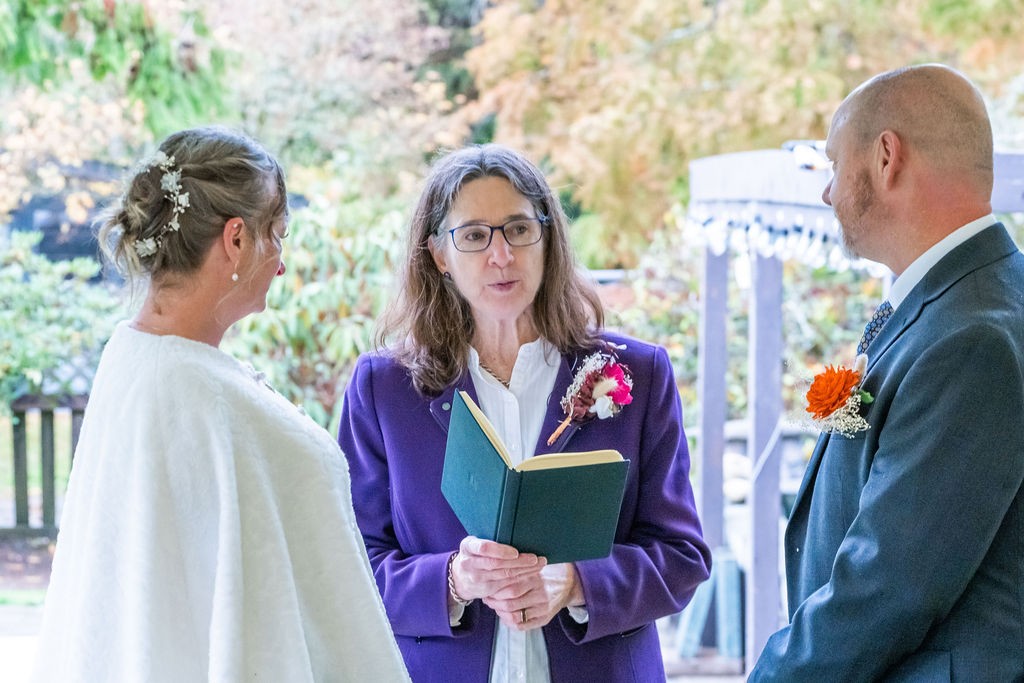
Who walks down the aisle, and in what order?
Here is the full traditional sequence, ready to copy into your ceremony plan:
- The officiant takes their place, often with the groom already beside them.
- Grandparents are escorted in and seated, groom’s side first, then bride’s.
- Parents of the groom walk in and take their seats.
- Mother of the bride is seated last of the family, the traditional signal that the ceremony is beginning.
- The groom enters, either from the side with the officiant or up the aisle with his parents.
- The wedding party processes, groomsmen and bridesmaids in pairs or one by one.
- Best man and maid of honor come last of the party.
- Ring bearer, then flower girl, always directly before the bride, because nothing warms up a crowd like a four year old taking their job very seriously.
- The bride and her escort enter, and everyone stands.
Jewish tradition has both parents escort each partner, and many modern couples borrow that regardless of tradition. Two grooms or two brides commonly enter one after the other, or together, or down two aisles at once. The deeper cultural variations are covered well in The Knot’s processional guide. The order is a starting point, not a law.
How does each entrance photograph?
This is the layer nobody plans for, and it is the difference between a gallery full of faces and a gallery full of backs of heads.
- Spacing is everything. Send each person or pair when the one ahead is about two thirds of the way down. Stacked entrances mean someone is always blocked in every frame.
- Walk slower than feels natural. A processional walk should feel almost too slow from the inside. That pace is what reads as graceful in photos, and it gives me time to catch each person sharp.
- The pause at the top. Bride and escort, stop for two full breaths before you start walking. That pause is the single best portrait opportunity of the entire processional, and most couples skip it out of nerves.
- Think about the escort’s arm. Whoever walks you down, take the arm that puts you closer to the guests. You will be looking toward your partner anyway, and it keeps your face open to the aisle.
- Tell the groom where to look. His reaction is the second most photographed moment of the processional. Standing angled toward the aisle, not square to the guests, keeps his face visible for it.
- Brief the officiant on the kiss. A good officiant steps aside for the first kiss so they are not floating between your faces in every frame. Thirty seconds of planning saves the shot.

How long does a wedding processional take?
Plan on about five minutes for a typical party of six to eight, a little more with grandparents who deserve an unhurried walk, a little less for an intimate ceremony. It matters because your processional sits inside the ceremony block of your timeline, and squeezing it is how weddings start late. My guide to how many hours of wedding photography you need shows where the ceremony block fits in the whole day.
What about the recessional, the walk back up?
The recessional is the processional in reverse and in triple time. You two exit first, immediately after the kiss and the pronouncement. The wedding party pairs up and follows, maid of honor with best man leading. Parents and grandparents come after, then the officiant releases the guests row by row.
Two photo notes that make the recessional gallery worth having. First, walk back up the aisle slowly and look at your guests, not the exit. The frames of you two beaming while your people cheer are some of the happiest of the whole day, and racing to the end of the aisle deletes them. Second, decide in advance where you are walking to. A couple that exits with a destination looks joyful. A couple that stalls ten feet past the last row looks lost, and now eighty people are watching you improvise.
Should you ask guests to put phones away?
For the processional, yes, and here is the honest reason. The most common casualty of an aisle entrance is not bad light or bad timing, it is an uncle leaning into the aisle with a tablet. An unplugged ceremony, or even a one sentence note from the officiant before the entrances, keeps the aisle clear and every guest’s face in the photos instead of their screens. You paid for the moment. Let it be photographed clean.
What should you customize?
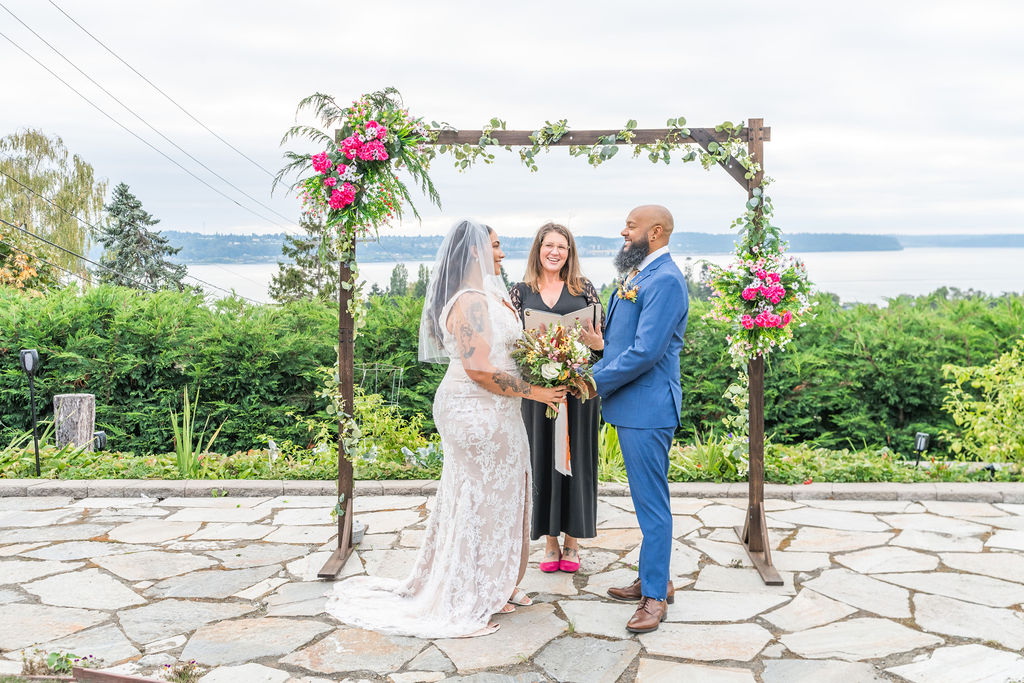
Whatever carries meaning. I have photographed a bride walked down by her father wearing his Navy warfare pin, entrances to live acoustic covers, and a dog as ring bearer who absolutely understood his assignment. Around Kitsap and the South Sound, outdoor aisles like a hilltop lodge lawn or a waterfront venue give you room that a narrow church aisle does not, which changes what is possible. You can see how an outdoor hilltop ceremony flows in this Bremerton Elks Lodge wedding.
Wedding processional order FAQ
Who walks the mother of the bride down the aisle?
Traditionally a son, a close relative, or an usher escorts her, and she is the last family member seated before the wedding party enters. If she is walking you down the aisle instead, an usher can seat her escort role earlier, or she simply takes her seat after your entrance.
Can the groom walk down the aisle too?
Absolutely. Entering with his parents is a tradition worth stealing, and it photographs beautifully. It also gives his family their own moment in the gallery, which they will thank you for at the reveal.
What order do bridesmaids walk in?
Furthest from the couple walks first, maid of honor walks last, so the lineup at the front builds outward from you. If heights vary a lot, shortest to tallest reads cleanly on camera, but relationship order matters more than symmetry. Tell each bridesmaid her number the night before and the top of the aisle sorts itself.
Where should everyone stand once they arrive at the front?
Angled toward the couple, not flat toward the guests, with a full step between each person. That angle keeps every face catching light and visible in the wide ceremony frames, and the spacing keeps the lineup from reading as a police lineup. Your officiant or coordinator sets the marks at the walkthrough, and I will fine tune from the back of the aisle before the entrances start.
Do we need a rehearsal for the processional?
A full rehearsal dinner is optional, but a fifteen minute walkthrough is not. Even the night before by phone helps. Everyone needs to know their cue, their pace, and where they stand at the front. Your coordinator or officiant usually runs it, and I am happy to add the photo notes.
What if it rains on an outdoor processional?
Every Puget Sound outdoor ceremony needs a covered plan B, full stop. The processional order stays identical under cover, it just compresses. Here is my full Puget Sound wedding rain plan.
Does a first look change the processional?
Not the order, only the emotion. Some couples worry a first look will flatten the aisle moment. In my experience it does the opposite, the nerves are already spent, so the walk becomes pure joy instead of held breath. Either way, the processional stays the same and both moments get photographed fully.
Does a longer processional cost more in photography coverage?
No. Five minutes of processional fits inside any ceremony block. What actually moves cost is total coverage hours across the day, and if you are still budgeting, my Washington wedding cost guide breaks down the real numbers venue by venue and vendor by vendor.
Should the processional be on our shot list?
Yes, entrance by entrance. Grandparents especially, since their walk is often the frame families treasure most later. My wedding family shot list guide covers how to build it without turning the day into a checklist.
Plan the walk, then forget about it
A processional plan exists so that on the day, nobody has to think about it. You walk, everyone you love watches, and I catch it. If you are still choosing who will document it, start with these 12 questions to ask Kitsap wedding photographers, and when you are ready, reach out and let us plan your ceremony coverage.


Fully guided sessions, a professional editing team behind every image, and a private reveal where you choose finished artwork for your walls. That is the difference between hiring a photographer and booking an experience.
Let’s bring your vision to life! Fill out the form below to ask any questions, share your story, or start planning your session. I’m here, ready when you are.


