


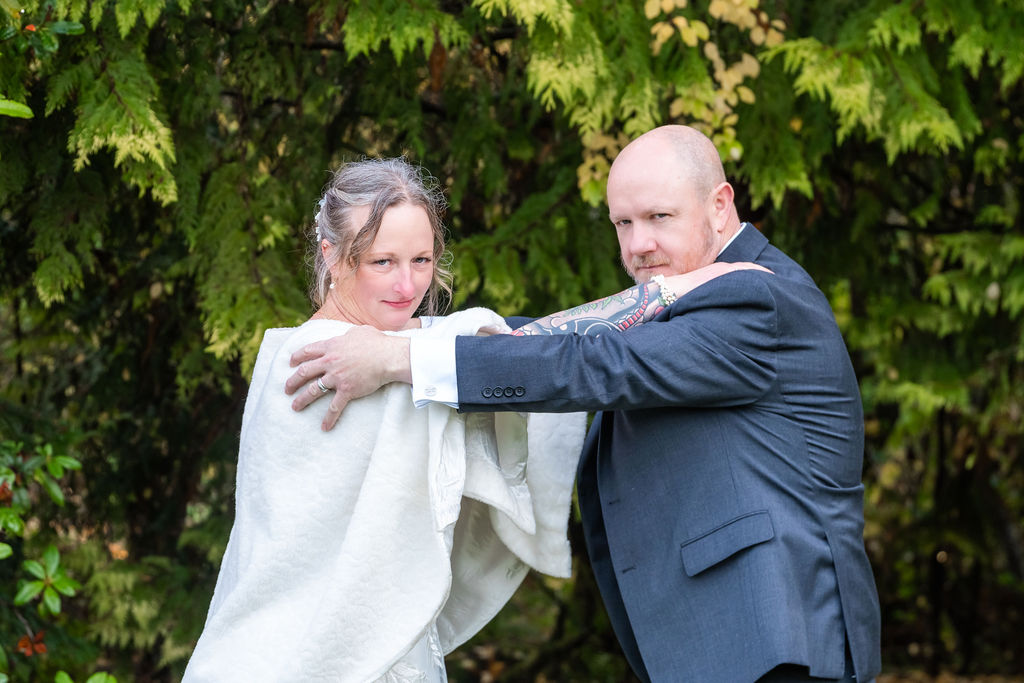
What do you call a wedding album with six hundred photos in it? A phone book. I will show myself out, but the joke is doing real work here, because almost every couple starts this conversation assuming that more pages equals a better book, and the opposite is true.
Here is the direct answer. A wedding album should hold somewhere between 40 and 80 photographs, laid out across roughly 20 to 30 pages. Ours hold up to 40 images in the 8 by 8 layflat book and up to 60 in the larger album, and I have never had a couple wish they had crammed in more. The hard part is not the number. The hard part is choosing, and that is most of what this post is about.
If you are planning a wedding anywhere in Kitsap County, Bremerton, Gig Harbor, Tacoma or around the Puget Sound and you are trying to figure out what happens after the gallery lands, this is the practical version.
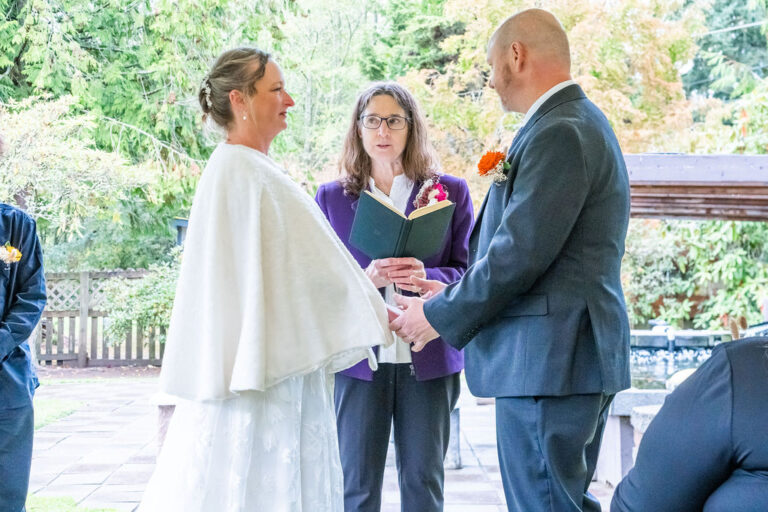
How many photos should be in a wedding album?
Between 40 and 80 images is the range that works for a full wedding day. Under about 35 and the story starts skipping; the album feels like a highlight reel with holes in it. Over about 90 and the good frames stop landing, because every strong photograph is sitting next to three near duplicates that dilute it.
The practical way to think about it: your album should have one clear image for every beat of the day, plus a handful of quiet frames that carry the feeling. That is roughly two to four images per spread across twenty to thirty pages, and it lands almost exactly in that 40 to 80 window every time.
How many photos will you actually have to choose from?
Plan on about 50 finished images per hour, per photographer. That is the delivery standard here, and it is a useful planning number because it tells you the size of the pile before you ever see it.
- Six hours of coverage with one photographer: roughly 300 images
- Nine hours with one photographer: roughly 450 images
- Eleven hours with two photographers: well north of 1,000 images
So a couple with a nine hour day is choosing about 40 album images out of about 450. That is a one in ten ratio, and when people hear it out loud they immediately understand why the album is curated rather than complete. If you are still deciding how many hours you need, this guide walks through how to determine your wedding photography hours, and this one covers whether six hours is enough for a shorter day.
Your full gallery is delivered within 30 days, with sneak peeks inside 24 hours so you have something to share while you are still riding the high. The album is the slower, better project that comes after.
Why more photos does not make a better album
Because an album is a story, and stories have pacing. When you put eleven frames of the same first dance across two spreads, none of them hit. When you put one, on its own page, with white space around it, you feel the room go quiet.
This is the part couples do not expect: the images you cut are what make the images you keep land. An album with 45 photographs in it feels more generous than one with 120, because every page earns your attention instead of asking for it.
It is also the difference between something you look at once and something that lives on the coffee table. Prints and albums outlast digital files for a reason, and it is not nostalgia. The Library of Congress tells people archiving their own photographs to check their digital files at least once a year and make fresh copies every five years. Nobody does that. A printed album does not need you to remember.
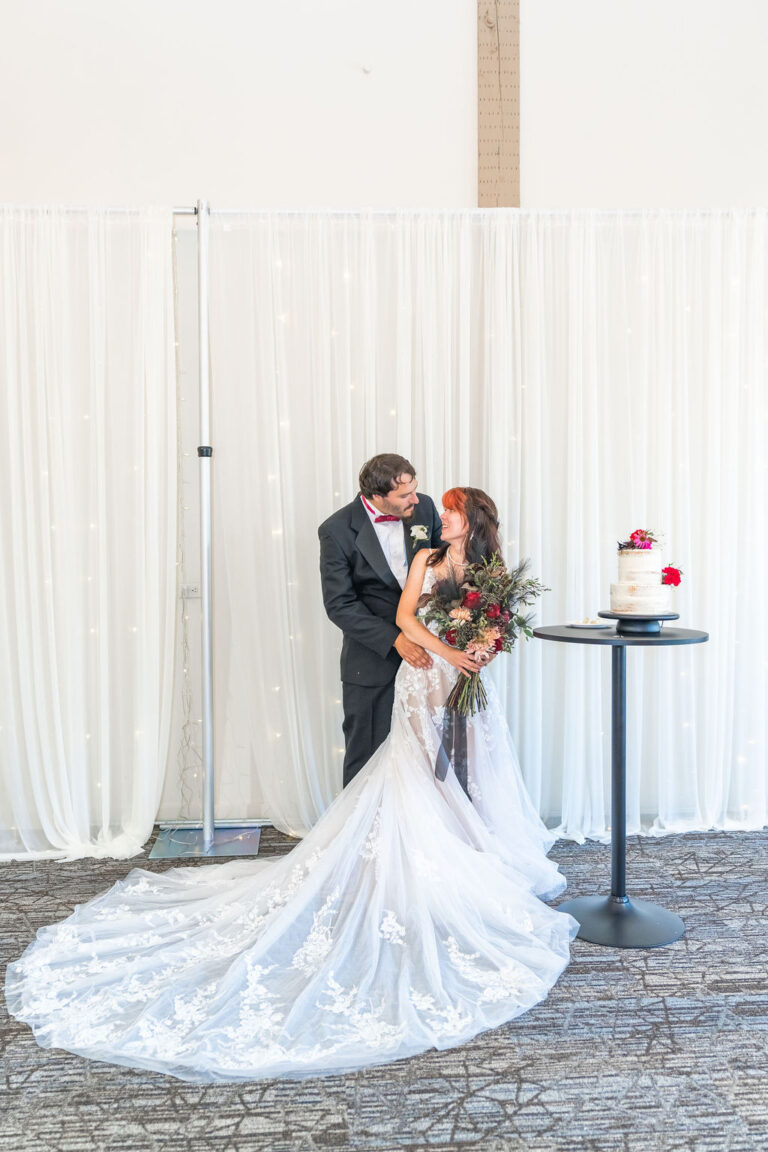
The five pass system for choosing your album photos
This is the actual process. It takes most couples about ninety minutes total, spread over two sittings, and it works because each pass asks you exactly one question instead of all of them at once.
Pass one: the gut pass (about 20 minutes)
Open the gallery and go through it once, quickly, favoriting anything that makes you feel something. Do not think about balance, do not think about who is in it, do not think about whether it duplicates another frame. Speed is the point. If you stop to deliberate you will be there all weekend.
You will end this pass with somewhere between 120 and 200 favorites. That is correct. Do not panic.
Pass two: sort by the timeline, not by quality
Take your favorites and drop them into the beats of your day: getting ready, details, first look or first sight, ceremony, family and group photos, portraits, reception entrance, dinner and toasts, first dance and parent dances, cake, dancing, exit.
Now you can see the shape of it. Almost every couple discovers two things here. One section has forty favorites in it. Another section, usually the one they were least emotional about on the day, has three. That imbalance is the entire problem, and it is now visible instead of invisible.
Pass three: assign a budget per section
Give each beat a number before you start cutting. For a 40 image album, something like this works:
- Getting ready and details: 6
- Ceremony: 8
- Family and wedding party: 4
- Couple portraits: 8
- Reception, toasts and dances: 10
- Dance floor and exit: 4
Adjust the numbers to your day. If your ceremony was twelve minutes on a beach and your reception went five hours, move the budget. The point is that you decide the shape of the album first, then fill it, rather than letting whichever section you shot the most of take over the book. If you want to be sure the family and group section has what it needs, build it off your wedding family photo shot list.
Pass four: kill the near duplicates
Within each section, put the similar frames side by side and keep one. Not two. One. Same pose, same light, same moment, slightly different expression: pick the better expression and let the other one go. It still lives in your gallery forever. It just does not need a page.
This pass is where the count drops fast, usually from 150 down to about 60, and it is the single highest value twenty minutes of the whole process.
Pass five: the read through
Go through your remaining selects in order, start to finish, like you are reading the day. You are looking for three things: a gap where the story jumps, a stretch where the pace drags, and any frame that you kept for a reason other than the photograph itself. Fix those three things and you are done.
Then hand it over. You do not have to design the layout, sequence the spreads, or guess at what prints well. That is what the reveal is for, and we do it together.
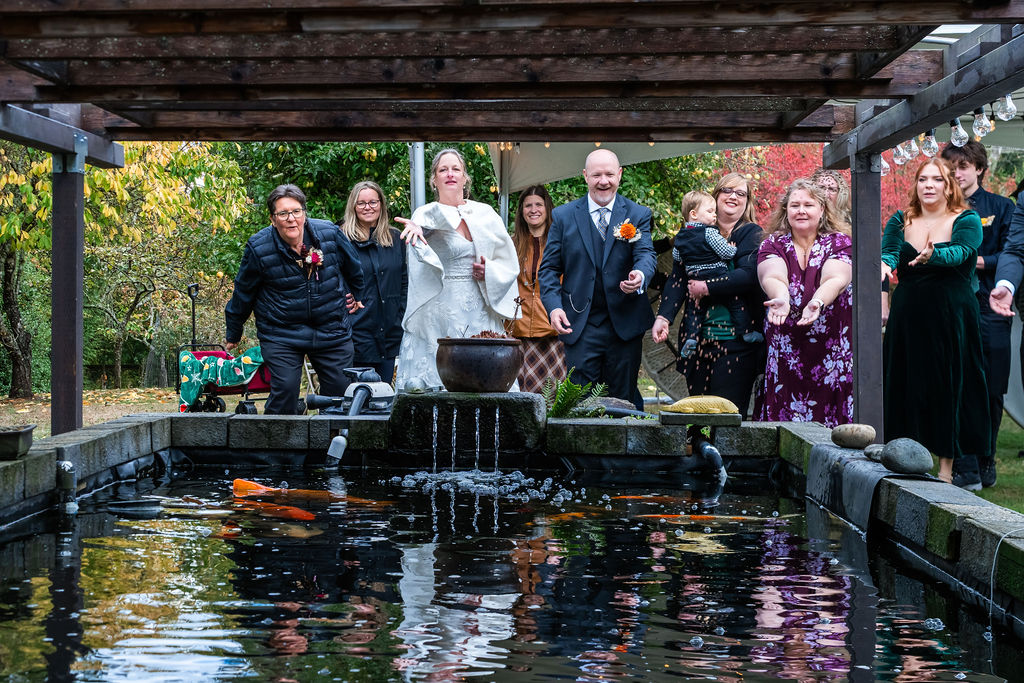
How many photos go on a single page?
One to four, and it should vary. A page with a single full bleed image is your loudest tool, so save it for the frames that deserve to be loud: the first look, the vows, the one portrait you will put on the wall. Two or three images on a spread is the workhorse layout and covers most of the book. Four or more starts to read as a collage, which is fine occasionally for the dance floor and almost never right for the ceremony.
A good rule: if a spread has more than four images on it, ask whether you are telling a story or hiding an indecision.
What our wedding albums actually hold
Two options, and they are built into the collections rather than sold as a surprise later.
- Premium layflat book, 8 by 8, 20 pages, up to 40 images. Included with the Anchor collection. Layflat means the spread opens completely, so a photograph can run across the center without losing a face in the gutter.
- Luxury album, 10 by 10, 30 pages, up to 60 images. Included with the Legacy Voyage collection, along with a 16 by 24 wall portrait.
What goes in the collections and what does not is laid out in what is included in a wedding photography package, and if you are still comparing across the region, the cost guide for wedding photographers in Kitsap, Seattle and Tacoma has honest numbers.
What do you do with the photos that do not make the album?
They do not disappear, and they should not sit in a folder either. The three things couples are happiest they did:
- A wall portrait. One image, printed large, somewhere you walk past every day. This is almost always a portrait of the two of you rather than a group shot.
- Parent albums. A smaller version of the same book for each set of parents. It is the best gift either family gets that year and it costs you nothing extra in effort.
- A small folio or a set of prints. Ten or twelve images you can actually hold. Album versus wall art versus digital breaks down which format suits which images.
When should you choose your album photos?
Inside the first three months, while you still remember who everyone is and what was happening. The couples who wait a year are not lazy, they are busy, and the cost is real: details blur, the emotional pull fades, and choosing becomes a chore instead of a night in with a glass of wine.
Do it in two sittings rather than one. Pass one and two on a weeknight, passes three through five a few days later. Fresh eyes cut better.
Frequently Asked Questions
How many photos should be in a wedding album?
40 to 80 images across roughly 20 to 30 pages. Our layflat book holds up to 40 and the larger album holds up to 60. Fewer, better images always reads stronger than more.
How many photos will I get from my wedding?
About 50 finished images per hour, per photographer. A six hour day lands near 300, a nine hour day near 450, and an eleven hour day with two photographers runs well over 1,000.
Do I have to choose the album photos myself?
You choose the images that matter to you, and we handle the sequencing, sizing and layout. Most couples want a say in what goes in and no say at all in what goes where, which is exactly the right split.
How long does it take to pick album photos?
About ninety minutes if you use the five pass system above, split across two sittings. It takes considerably longer if you try to decide everything on the first scroll.
Can our parents get their own album?
Yes. Parent albums are usually a smaller version of your book using the same selects, so there is no second round of choosing.
Is an album worth it if we already have the digital files?
Digital files are the archive. The album is the thing anyone actually looks at. Files need you to migrate them every few years to stay readable, and almost nobody does that. A printed book on a shelf asks nothing of you.
What size should our wedding album be?
The 8 by 8 layflat suits a tighter, curated 40 image story and travels well. The 10 by 10 gives images more room to breathe and suits a longer day with two photographers and more sections to cover.
When do we get the album after we choose the photos?
We finalize your selects at your reveal, then the book goes into production. Your full gallery is delivered within 30 days of the wedding, so you can start the process well before your first anniversary.
Let’s Plan the Book Worth Keeping
The album is the piece your kids will pull off the shelf in twenty years. It is worth twenty to thirty pages of your genuine favorites rather than a hard drive nobody can find. If you want to talk through hours, coverage and what your album should actually hold, take a look at how I photograph Kitsap weddings, read up on whether to include getting ready photos so the front of your album has somewhere to start, and then grab a fifteen minute call and we will map it out together.


Fully guided sessions, a professional editing team behind every image, and a private reveal where you choose finished artwork for your walls. That is the difference between hiring a photographer and booking an experience.
Let’s bring your vision to life! Fill out the form below to ask any questions, share your story, or start planning your session. I’m here, ready when you are.


