


Every reception has one uncle who believes he is the photographer. He has a phone, a flash, and no plan, and he will step directly into the aisle during the first dance. I have made peace with him. He is part of the ecosystem, like barnacles. What I have not made peace with is a couple losing the toast photo because nobody told me who was speaking.
Here is the short answer. A wedding reception shot list is the set of moments your photographer needs to be in position for before they happen, not a list you hand over at the door. The must haves are the empty room before guests walk in, your grand entrance, the toasts, the first dance, the parent dances, the cake cutting, a packed dance floor, and your exit. The reason it matters is timing. Almost every reception photo that gets missed is missed because the photographer was standing in the wrong place, not because they were not paying attention. Below is the full list, the order it usually happens in at Kitsap and Tacoma weddings, and what I am doing in the room to make sure none of it slips by.
What Is a Wedding Reception Shot List?
It is a short document that tells your photographer three things: what is happening, roughly when, and who is involved.
This is a different animal from your family photo list. That one is about names and groupings, and it happens in a controlled window right after the ceremony. If that is what you are looking for, read the wedding family photo shot list instead, and how long wedding family photos take for the timing.
A reception list is about position. I cannot pose a toast. I can only decide, before the person picks up the microphone, whether I am standing where I will see your face while they speak. That decision is the whole job, and it is made with information you give me in advance.
The good news is that it is short. You are not writing out two hundred moments. You are telling me who is toasting, whether you are doing parent dances, whether there is a surprise, and when you plan to leave.
The Must Have Wedding Reception Photos
Here is the working list, in the order it usually unfolds. Each one is a real moment with a real reason attached.
| Moment | When it happens | Why it matters |
|---|---|---|
| The empty room | Before guests enter | The only chance to photograph what you spent months planning |
| Details and place settings | Before guests enter | Florals, signage, favors, the cake, the table numbers |
| Grand entrance | Start of reception | Highest energy moment of the night |
| First dance | Usually right after the entrance | Your faces, plus the guests watching you |
| Welcome and blessing | Before dinner | Often the only photo of whoever welcomes everyone |
| Toasts | Roughly 30 to 40 minutes into dinner | The speaker and your reaction are two different photos |
| Parent dances | After dinner | The most emotional frames of the night |
| Cake cutting | Varies, sometimes before dinner | Short, and it only happens once |
| Open dance floor | After cake | Proof the party actually happened |
| Golden hour couple portraits | Pulled from dinner, weather permitting | The best light of the entire day |
| The exit | End of night | Sparklers, bubbles, or a quiet walk to the car |
The Empty Room Comes First, and It Is Non Negotiable
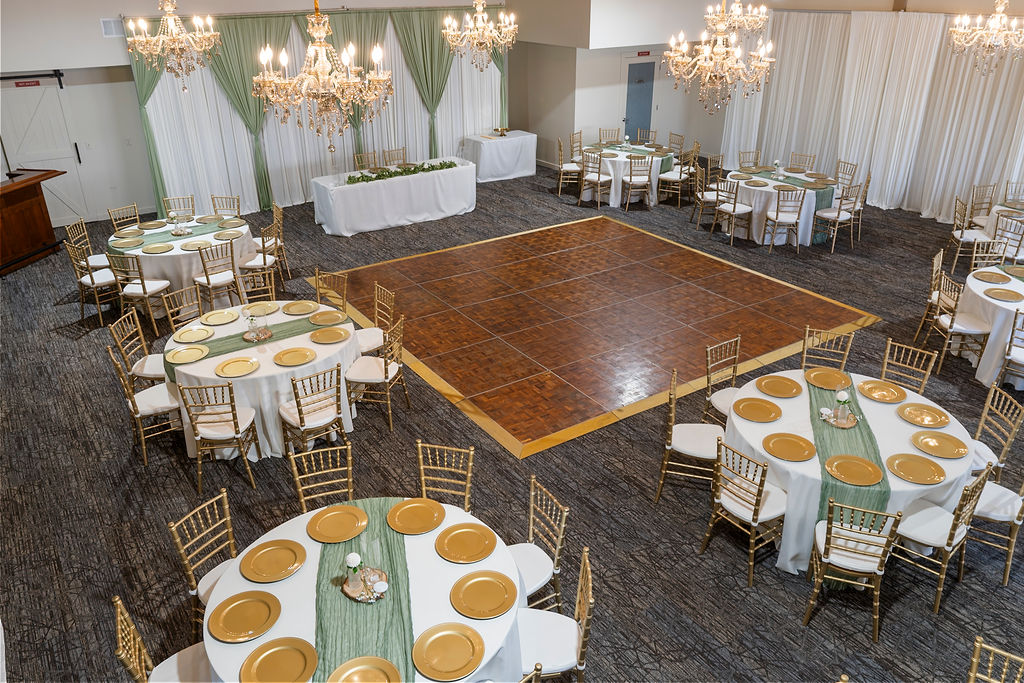
You will spend a large share of your budget and most of your planning energy on a room that exists in its finished state for about eleven minutes. If I am not in there before the doors open, that room is gone.
This is the single most commonly missed reception photo, and it is missed for a boring reason: the venue is still setting up during cocktail hour and nobody built a gap into the timeline. When we plan your day, I ask your coordinator for a hard time when the room is finished and guests are still elsewhere. Ten minutes is enough.
Toasts Are Two Photos, Not One
Every toast produces at least two images that matter, and they are in opposite directions. There is the person speaking, and there is you listening. The second one is usually the better photograph, because that is where the reaction lives.
This is why I ask for the names in advance. If I know your dad is going third, I am already positioned so I can pivot between him and your face without walking through the middle of the room. If I do not know, I find out when he starts talking, and I lose the first fifteen seconds getting into place. Those fifteen seconds are usually where the voice cracks.
The First Dance Needs Room and a Plan
Two things ruin first dance photos: guests crowding the floor with phones, and a DJ light rig pointed straight at your faces.
The first one is a conversation with your coordinator or MC, who can simply ask guests to give you the floor for the song. The second is a conversation between me and your DJ before the reception starts, which I have at nearly every wedding. Colored uplighting on a wall is beautiful. The same light on skin turns everyone green.
If phones during key moments are a concern for you generally, that decision is worth making early rather than during the song.
Parent Dances Are Where the Night Gets Real
If you are doing them, tell me who and to what. These are short, they are emotional, and they almost always produce the frame a parent ends up printing.
I photograph these tighter than anything else at a reception. Wide shots of a parent dance are pleasant. Close ones are devastating in the right way, and that only works if I am already near the floor when the song starts.
Cake Cutting Is Faster Than You Think
The whole thing takes under a minute. Cut, lift, feed, laugh, done. Tell your MC to announce it rather than letting it happen quietly in a corner, because a silent cake cutting is a cake cutting nobody photographed.
The Dance Floor Needs You On It
Dance floor photos are only as good as the dance floor. If the couple leaves to go say hello to tables, the floor empties within a song. If you are out there, everyone is out there.
Practically, I shoot the dance floor in two passes: early, when the light is still clean and people are self conscious in a charming way, and late, when nobody cares anymore. The late pass is always better.
Steal Ten Minutes for Golden Hour
The best light of your entire wedding day happens during dinner, and you will be sitting inside eating chicken.
I will ask to borrow you for about ten minutes near sunset. It is the only time all day you will be alone together, the light is at its best, and guests barely notice you are gone because they are eating. In the Pacific Northwest that window moves substantially through the year, so we set it when we build your timeline. Almost every couple who does this says it was their favorite ten minutes of the night.
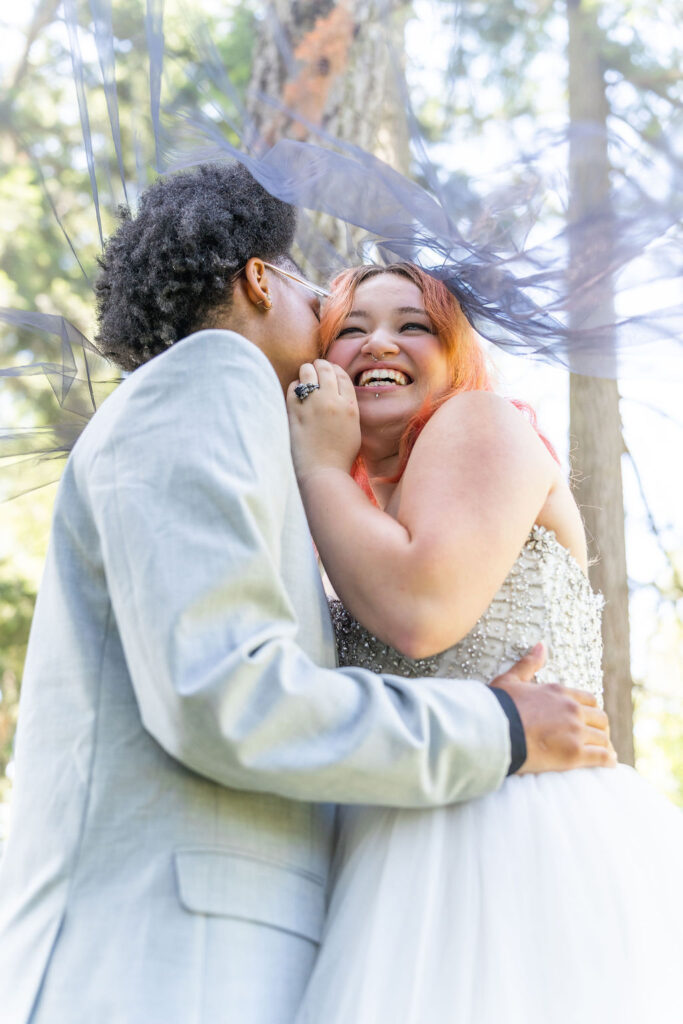
I backlight these, meaning the sun sits behind you and faces get brightened in post. That is where the warm rim of light on shoulders and hair comes from, rather than two people squinting into a sunset.
How Does a Photographer Actually Run a Reception?
Quietly, and mostly in advance.
Before the reception opens I do three things. I talk to your DJ or MC about the order and about lighting. I find your coordinator and confirm the room reveal time. And I walk the space to find where I will stand for the entrance, the toasts, and the dances, so I am not solving that problem live.
During the reception my job is anticipation. Announcements come from the MC, so I stay close enough to hear what is coming next. When the MC picks up the microphone, I move before I know why. That habit is worth more than any piece of gear.
Taking charge of a room without being loud in it is the whole skill. You should not notice me working, and you should never feel managed. You should just look back at the gallery and find that everything was there.
What Time Does Everything Happen at a Reception?
The common order is entrance, first dance, welcome, dinner, toasts about thirty to forty minutes into dinner, parent dances, cake cutting, then an open dance floor for the rest of the night.
That order moves around, and it should. Some venues want the cake cut early so staff can plate it during dinner service. Some couples put the first dance after dinner. Some skip the garter and bouquet entirely, which nobody has ever regretted. The order matters far less than the fact that somebody wrote it down and gave it to the vendors.
What I need is the version your venue and coordinator actually agreed to, not the version from a planning website. Kitsap and Tacoma venues each have their own constraints, from noise ordinances to hard end times, and those shape the night more than tradition does. You can see how that plays out at a real venue in our Vickery Gardens wedding guide, where the venue’s own site lays out how their evenings run, and at the Bremerton Elks Lodge.
Do You Need a Second Photographer for the Reception?
Sometimes. It depends on guest count and how much is happening at once.
A second shooter earns their keep at a reception in one specific way: during toasts and dances, one of us covers the speaker and the other covers your face. With a single photographer those are sequential. With two they are simultaneous, and you get both sides of the same second.
For a smaller Kitsap wedding, one photographer who knows the timeline is genuinely plenty. For a larger reception with a long head table and multiple simultaneous traditions, a second pair of hands changes what is possible. We talk through it during your consult rather than defaulting either way, and what is included in a wedding photography package covers how that fits into a collection.
How Many Hours of Coverage Do You Need for the Reception?
Work backwards from your exit, not forwards from getting ready.
The most common coverage mistake I see is a package that ends thirty minutes before the best part of the night. Dance floors get good late. If your coverage stops at nine and the party runs to eleven, your gallery ends on a half full room.
If you want an honest look at where the line falls, is six hours of wedding coverage enough walks through when it works and when to add. And if you are still building the budget, what a wedding photographer costs in Kitsap County lays out real numbers.
Frequently Asked Questions
What photos should be on a wedding reception shot list?
The empty room before guests enter, details and place settings, the grand entrance, the first dance, the welcome or blessing, each toast plus your reaction, parent dances, the cake cutting, a full dance floor, golden hour couple portraits, and your exit.
How is a reception shot list different from a family photo list?
A family photo list is about names and groupings during a controlled window after the ceremony. A reception list is about position and timing, telling your photographer what is coming so they are standing in the right place before it starts.
When do toasts usually happen?
Roughly thirty to forty minutes after guests have sat down with their meals, though venues and couples move this. Give your photographer the names and the order in advance.
Should we cut the cake before or after dinner?
Either works. Some venues prefer it before or during dinner so staff can plate slices for service. What matters is that it gets announced rather than happening quietly in a corner.
Do we need a second photographer for the reception?
For a large reception with a long head table or simultaneous traditions, a second photographer lets one cover the speaker while the other covers your reaction. For a smaller wedding, one photographer with a clear timeline is usually plenty.
How do we get good dance floor photos?
Stay on the floor. When the couple leaves, the floor empties within a song. Also make sure your DJ is not aiming colored light directly at faces, which turns skin unnatural colors.
Should we do photos during golden hour at the reception?
Yes, if the weather allows. Ten minutes near sunset during dinner gives you the best light of the day and the only quiet time you will have together. Guests are eating and barely notice.
What is the most commonly missed reception photo?
The finished, empty room. It only exists for a few minutes before guests walk in, and if nobody builds that gap into the timeline it is gone for good.
Related Guides
More for planning the day: how far in advance to book a wedding photographer, light and airy versus true to color for PNW skies, and the best wedding venues in Tacoma and Gig Harbor if the room itself is still being decided.
Let’s Build Your Timeline
You should not have to become a photography director to get the photos you want. Send me your run of show, tell me who is speaking, and I will handle the rest of it from the empty room to the last song.
See how coverage works on the Bremerton wedding photographer page, then grab a fifteen minute call and we will walk your reception hour by hour.


Fully guided sessions, a professional editing team behind every image, and a private reveal where you choose finished artwork for your walls. That is the difference between hiring a photographer and booking an experience.
Let’s bring your vision to life! Fill out the form below to ask any questions, share your story, or start planning your session. I’m here, ready when you are.


