


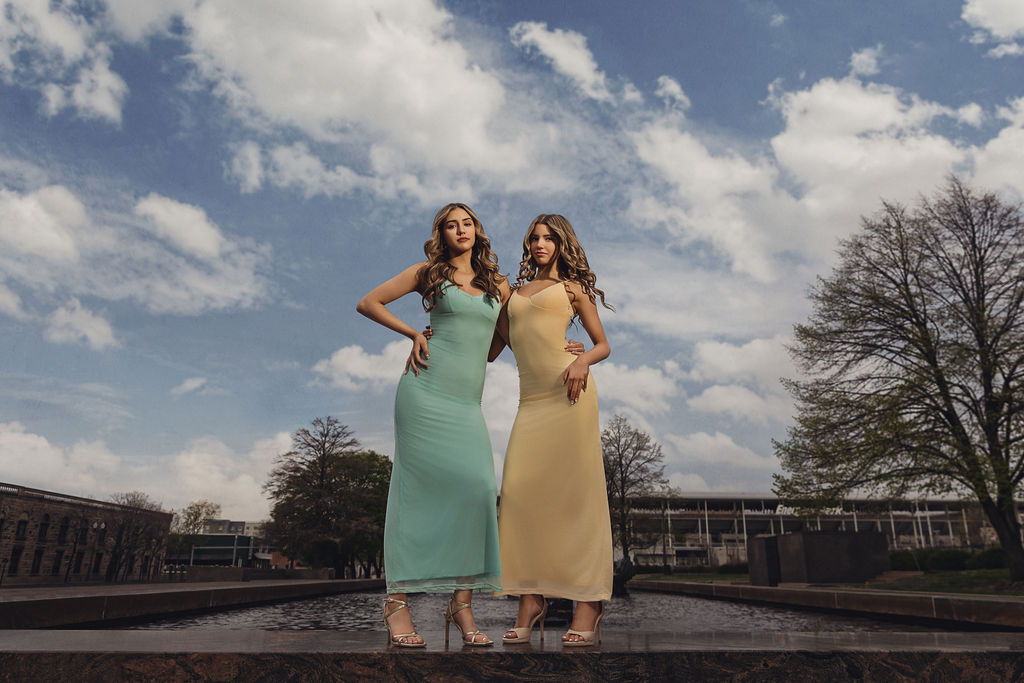
Why Feeling Awkward in Photos Is Totally Normal
If you’ve ever looked at a camera and instantly felt like you forgot how to be a person, you’re in the majority. Feeling awkward in photos isn’t a personality flaw it’s a human response to being observed, evaluated, and frozen into a single frame. In real life, you’re dynamic: you talk, you shift your weight, you react, you breathe. In a photo, you’re asked to compress all of that into one still moment while also trying to look “natural.” That contradiction is exactly why so many people feel stiff, unsure, or overly self-aware. Add in the fact that most of us only see ourselves in mirrors (a reversed version) and selfies (a distorted, close-angle version), and it makes perfect sense that professional photos can feel unfamiliar at first.
The most common thought I hear by far is: “What do I do with my hands?” Hands are expressive, but when you don’t know what to do with them, they suddenly feel like loud, distracting objects attached to your body. People clamp them to their sides, hide them behind their back, ball them into fists, or let them hover in midair like they’re waiting for instructions. That’s not because you’re awkward; it’s because you’re missing context and direction. When you normalize that feeling instead of fighting it, everything changes. The goal isn’t to pretend you’re never nervous the goal is to give your body a simple plan so you can relax into the moment, trust the process, and look like yourself in a polished, elevated way.
What Actually Creates Confidence (Not Experience)
Confidence in photos usually isn’t something you “earn” after years of being photographed it’s something that gets created in real time through direction, movement, and a supportive environment. People assume models look confident because they’ve done it a thousand times, but what’s really happening is that they’re being guided constantly: where to stand, where to look, what to do with their hands, when to breathe out, how to angle their shoulders, how to soften their expression. When those variables are handled for you, your brain stops scrambling for solutions and starts focusing on presence. That’s why first-time clients can look incredibly high end with the right guidance, and why experienced people can still look tense if they’re left without direction.
Free planning tool
The Class of 2027 Kitsap Senior Photo Planner
The yearbook deadline tracker for every Kitsap area school, real golden hour dates for Bremerton, the booking timeline from now to graduation, and a style quiz for your senior. We will email it to you, plus an alert when your school publishes its real deadline this fall.
Movement is another huge confidence-builder and it doesn’t have to be big. Subtle movement gives your body something to do, which reduces stiffness immediately. Think: a slow weight shift, a gentle step, a slight turn of the head, a small adjustment of the jacket or hair, a relaxed exhale. Environment matters too: the right space, the right light, and a calm pace all signal safety to your nervous system. And photographer guidance is the thread that ties it together. When you know you’re being watched with care (not judged), and when someone is calmly leading you through micro-decisions, your expression changes naturally. The confidence you see in a strong portrait is often the result of clear direction and steady leadership not “being good at photos.”
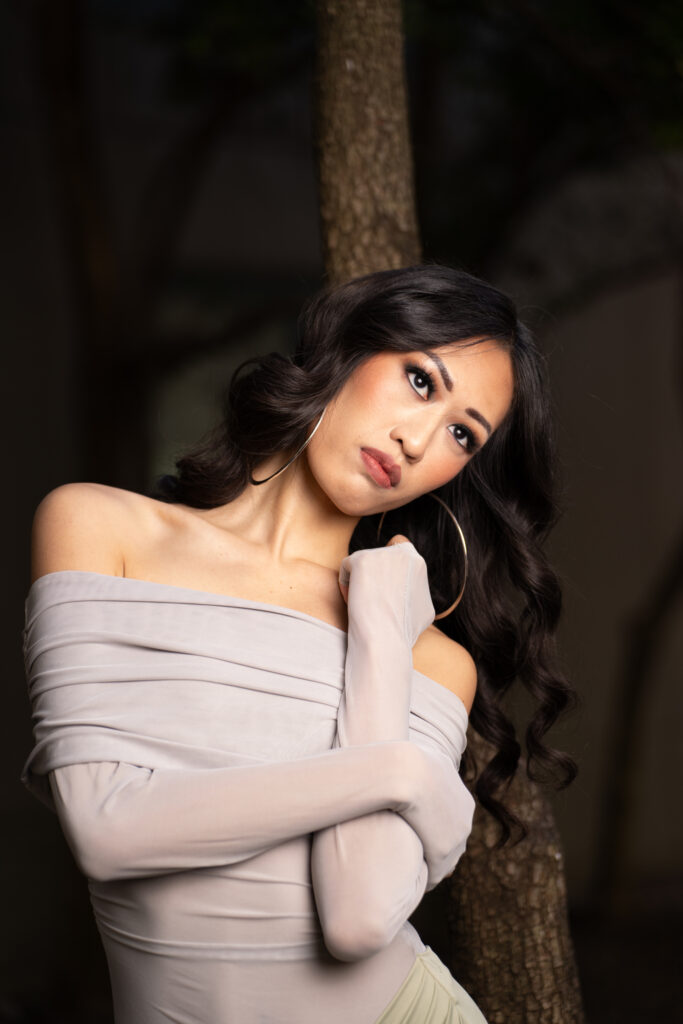
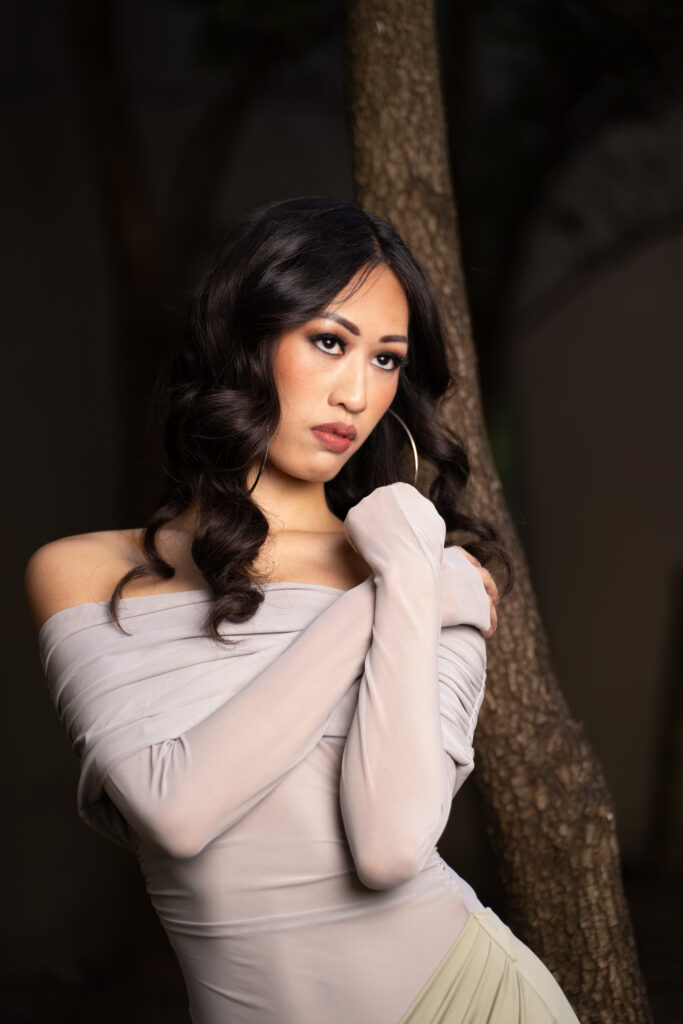
Session Breakdown: Hands, Eyes, Movement, Shoulders
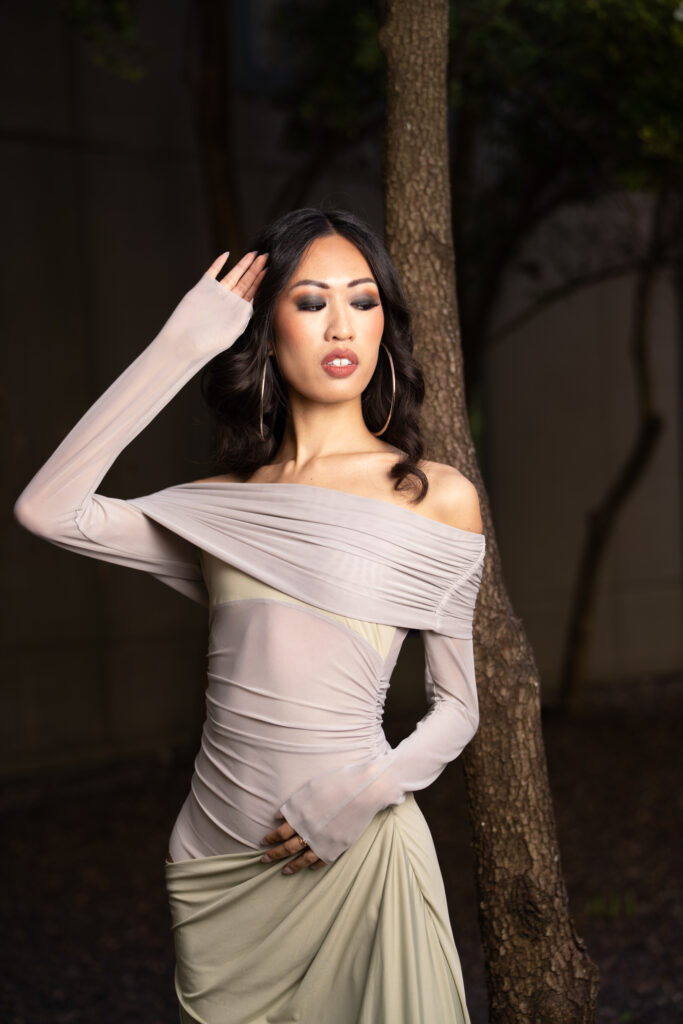
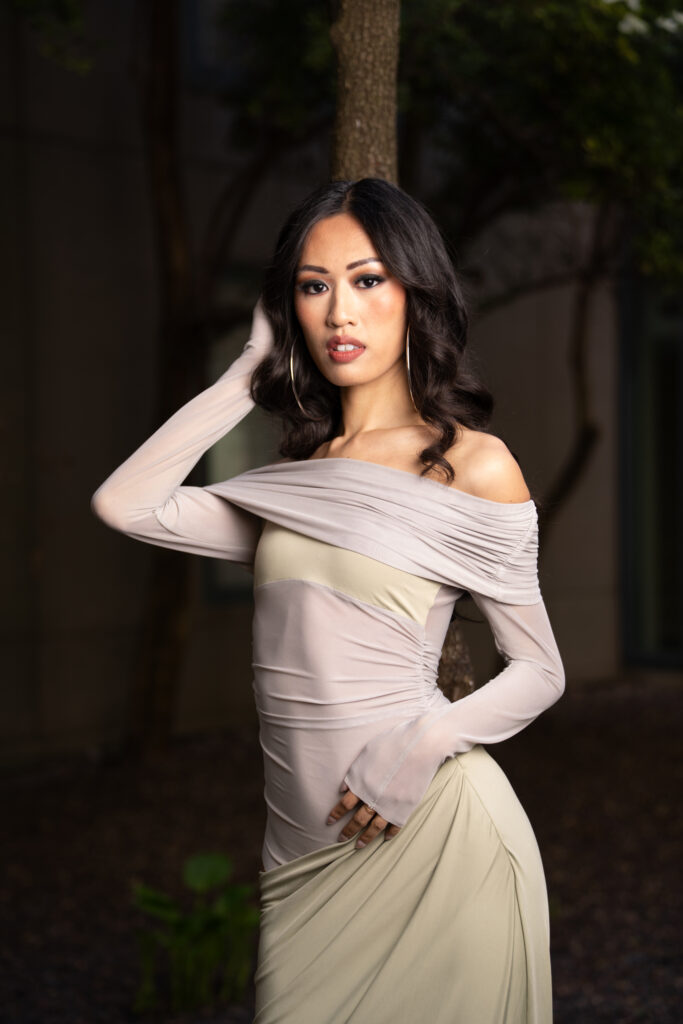
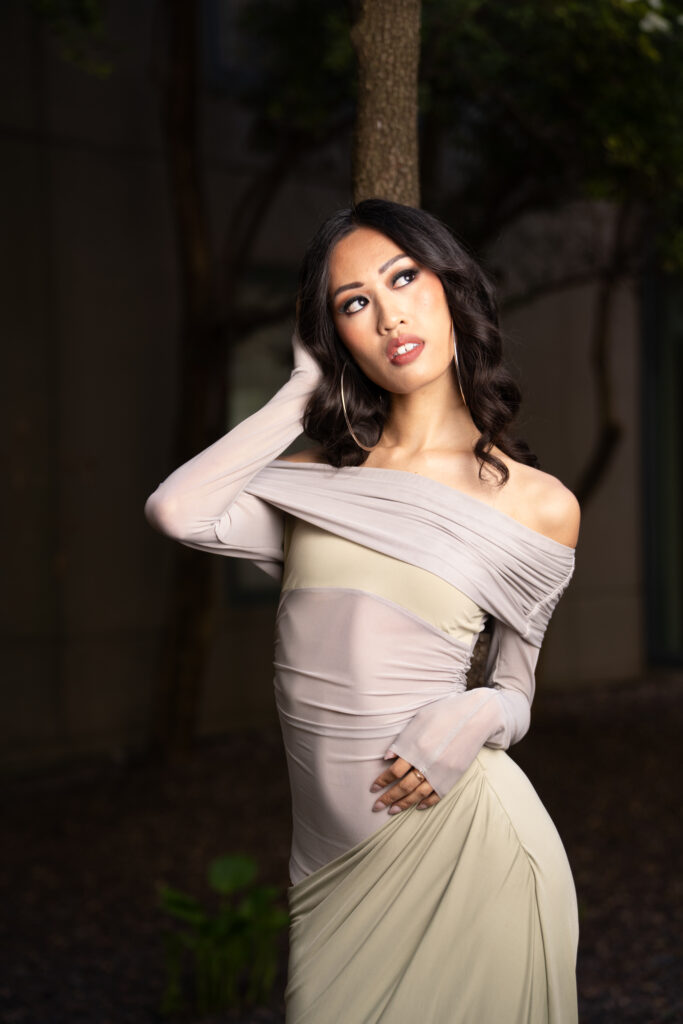
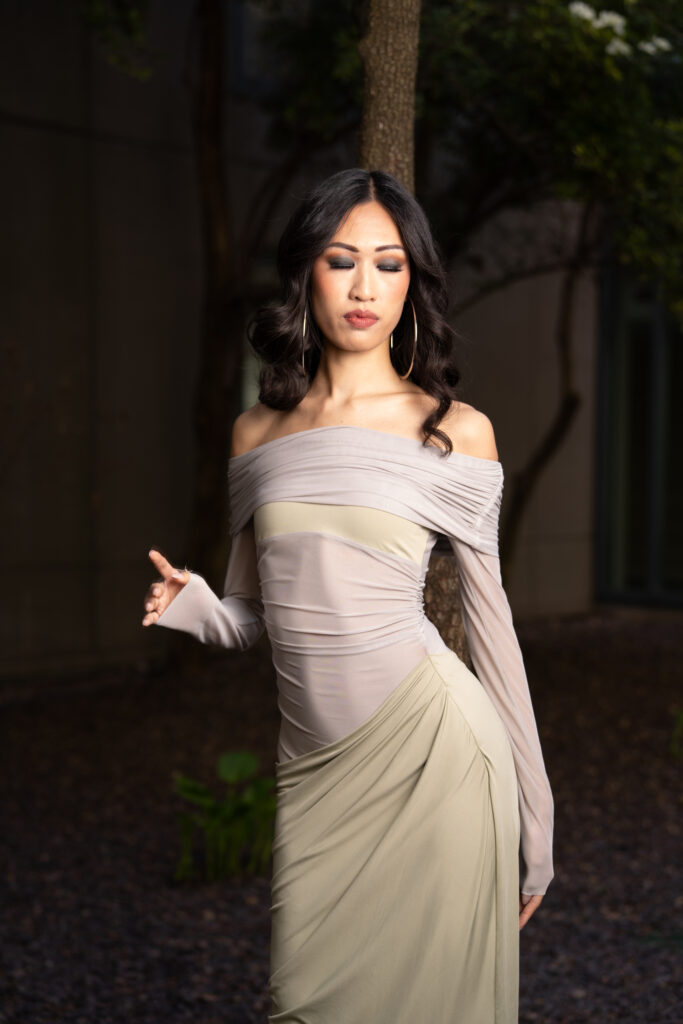
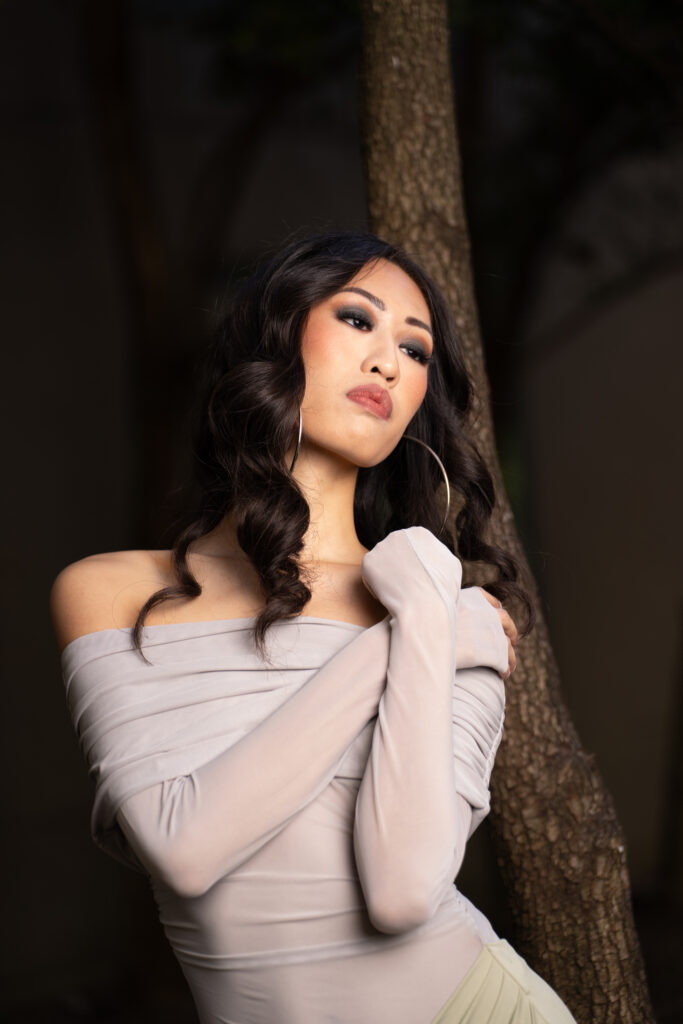
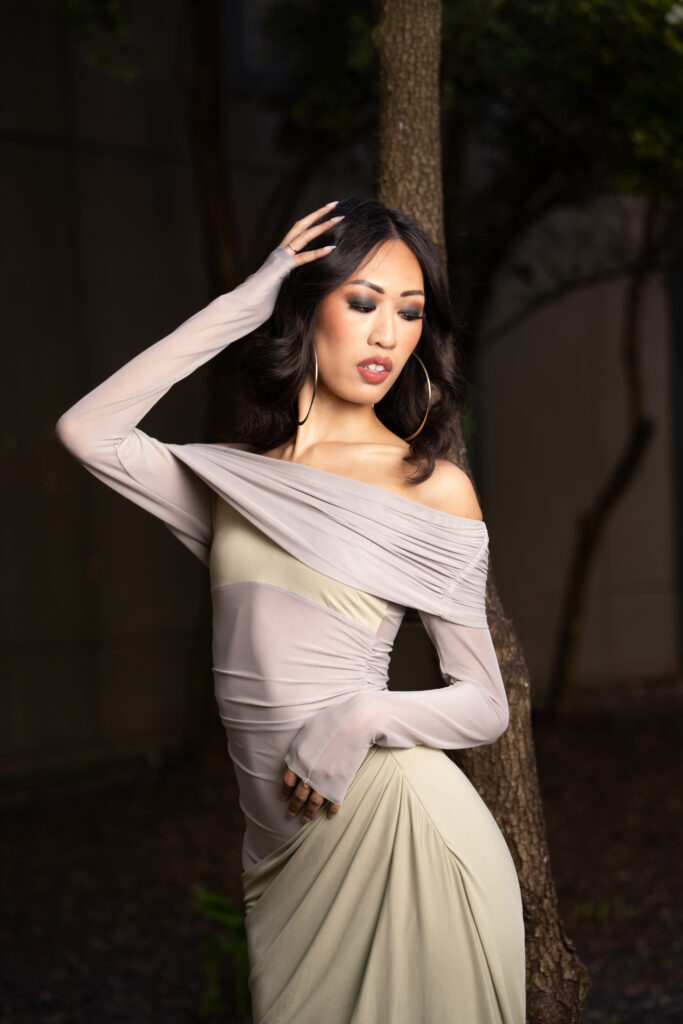
In this session, the images show exactly what makes a portrait feel relaxed and high-end at the same time: relaxed shoulders, intentional hands, thoughtful eye direction, and subtle movement. Start with shoulders when shoulders rise even slightly, the whole body reads as tense. Dropping the shoulders and letting the chest feel open instantly communicates ease. It also lengthens the neck and cleans up the lines of the portrait, which is one of those small details that separates “snapshot” energy from editorial polish. From there, hands become a styling tool rather than a problem. Instead of hiding them or letting them dangle, the hands are given a job: lightly touching fabric, resting in a pocket with the thumb visible, grazing the waistline, holding a lapel, or softly crossing at the wrist. The key is gentle pressure and natural curves no clenched fingers, no rigid straight lines.
Eye direction is another detail that quietly elevates everything. Looking straight into the lens can be powerful, but only when it’s intentional and supported by relaxed facial muscles. Looking slightly off camera can feel more candid, more cinematic, and often more comfortable for people who feel self-conscious. In these images, the gaze isn’t random it’s directed. That intention reads as confidence. Then there’s subtle movement: a small shift of weight, a slow step, a slight turn from the waist, or a gentle lean that creates shape. Movement creates micro-variations in posture and expression, which helps you land on frames that feel alive instead of posed. When you combine relaxed shoulders (ease), intentional hands (control), clear eye direction (story), and subtle movement (energy), the result is what people describe as “high-end.” It looks expensive not because it’s overly styled, but because every element feels purposeful, clean, and calm. Here is another Article on some more tips.
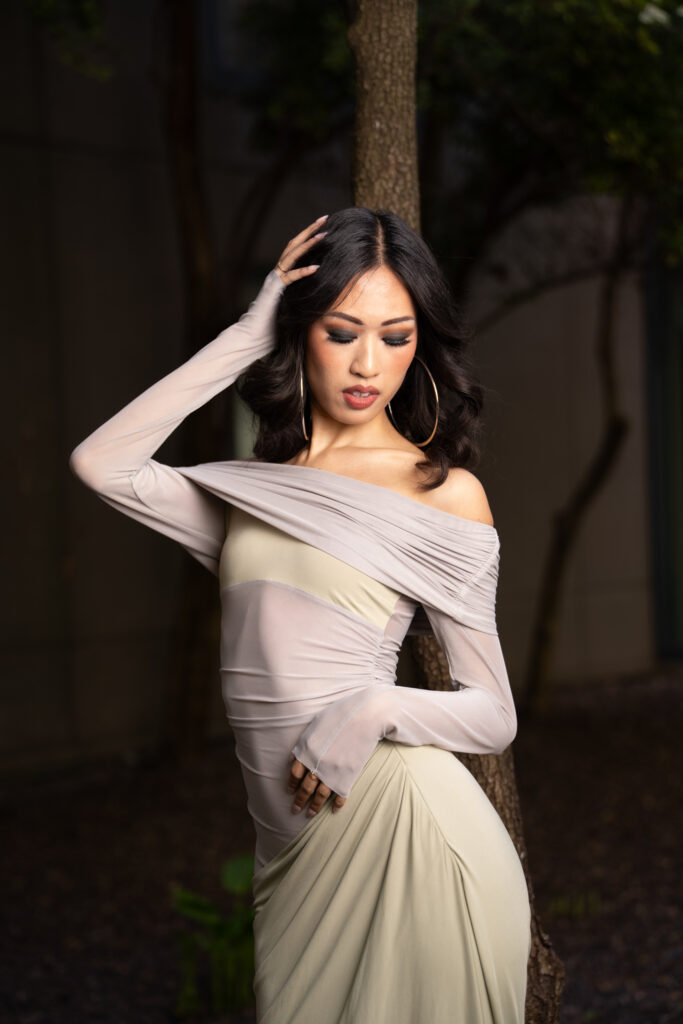
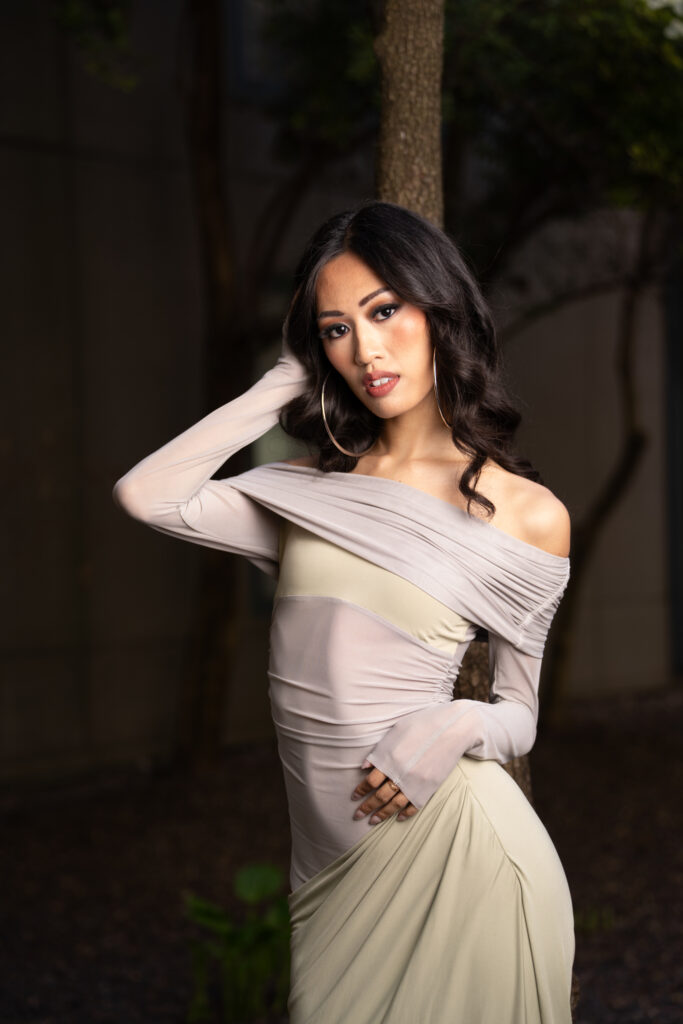
What to Wear for a High-End, Polished Portrait Look
This outfit is a perfect example of what photographs as elevated without feeling forced: neutral tones, a clean silhouette, and fabric that moves well. Neutrals think black, white, cream, taupe, camel, gray, navy, muted olive tend to read as timeless and editorial. They keep the focus on you rather than on loud patterns or trendy color blocks that can date quickly. Neutral doesn’t have to mean boring; it means refined. Texture becomes your best friend here: knits, wool, linen blends, structured cotton, silk, denim with a clean wash. A polished portrait look is often more about restraint and cohesion than it is about “statement pieces.” When everything works together, the image feels intentional and premium. This is what the knot says what to wear for engagement photos here.
Fit matters just as much as color. Form-fitting doesn’t mean tight it means shaped. Clothing that follows your lines (without pulling or bunching) creates a clean frame for your posture and helps your body language read confidently. Oversized pieces can work beautifully when styled with structure like a tailored coat, a strong shoulder, or a defined waist but random bagginess often adds visual noise. Movement in fabric is another underrated detail. A coat that swings slightly when you walk, a skirt that drapes, a blouse that catches light, or a jacket you can adjust with your hands gives you built-in posing options. It also creates those subtle moments of motion that feel candid and expensive. If you want a high-end portrait, choose pieces you can interact with naturally lapels, cuffs, pockets, belts because they give your hands something to do in a way that looks effortless.
How I Guide You with Prompts and Calm Leadership
Most people don’t need more “confidence” they need a photographer who gives them a clear plan. That’s why I guide you through the entire session with prompts that create natural expression and flattering body language. Instead of saying “Just be yourself,” I’ll give you simple, repeatable actions: “Shift your weight to your back foot,” “Drop your shoulders,” “Bring your chin forward and slightly down,” “Let your hand rest on the jacket and soften the fingers,” “Take a slow breath out,” “Look just past the camera like you’re noticing something.” Prompts like these remove the guesswork and keep you from defaulting into stiffness. They also help you feel like you’re doing something, not performing nothing because standing still with no direction is what makes people freeze. Here is some more guidance.
Then come the micro-adjustments, which are where the high-end look really gets built. Tiny changes an inch of chin, a half-step of distance, a slight turn of the wrist, a softer bend in the elbow, a small angle change in the shoulders can transform a frame. I’ll watch for tension in the hands, the jaw, and the shoulders, and I’ll help you release it without making it feel like a critique. Calm leadership means you always know what’s happening: what we’re doing, why we’re doing it, and what to do next. The pace stays steady, the feedback stays clear, and you never have to wonder if you’re “getting it right.” That’s how you end up with portraits that feel natural but look intentional images where you recognize yourself, but also see yourself elevated, polished, and fully at ease.
You do not need to wait until you feel confident to book a session. That is not how this works. Confidence is built in the process, in the movement, in the small moments where you stop overthinking and start showing up as yourself. Whether you are planning senior portraits, a beauty session, or simply want to create something that feels powerful and real, this experience is designed to guide you every step of the way. If you are ready to step into that version of yourself and walk away with images that actually feel like you, visit https://nauticalmoments.com and start planning your session.


Fully guided sessions, a professional editing team behind every image, and a private reveal where you choose finished artwork for your walls. That is the difference between hiring a photographer and booking an experience.
Let’s bring your vision to life! Fill out the form below to ask any questions, share your story, or start planning your session. I’m here, ready when you are.


